

What our research shows
The roadmap for a successful system
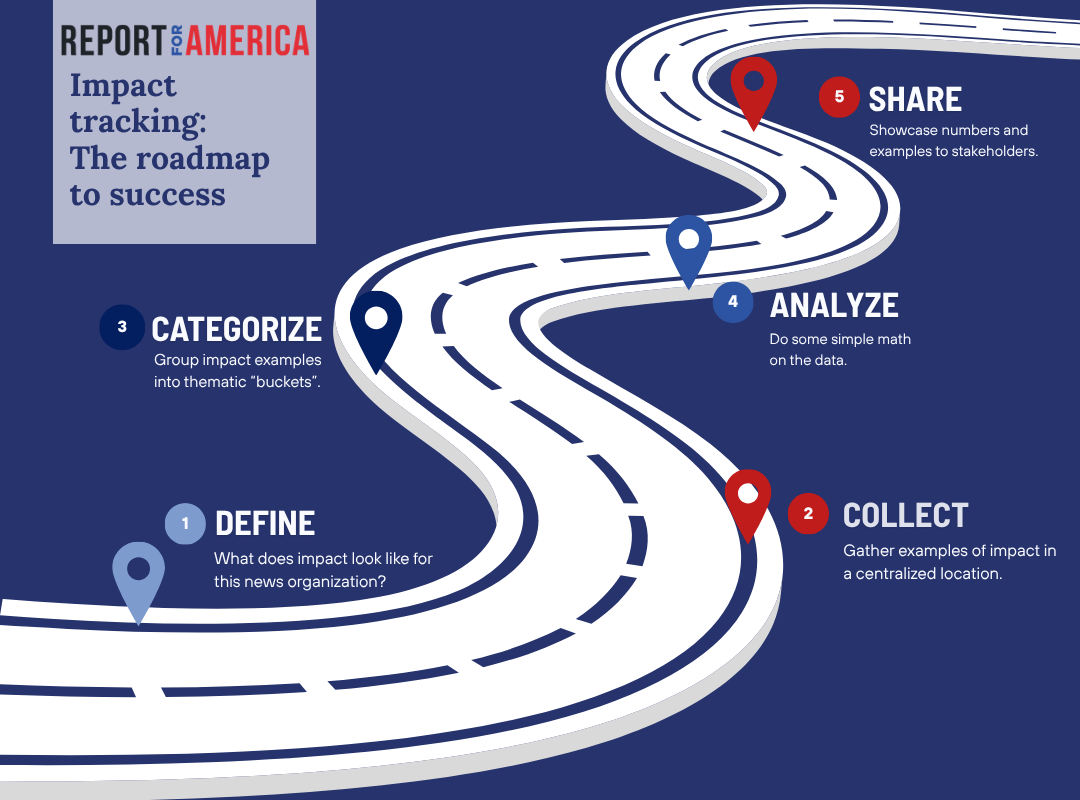
Impact tracking systems are as unique as the news outlets that build them, but the gold standard for any newsroom includes three elements: A data collector that everyone on staff can easily use, a database where the information lives, and a way of categorizing examples by type.
Here is our basic five-step impact measurement workflow:
1. Define: What does impact look like for this news organization?
2. Collect: Gather examples of impact in a centralized location.
3. Categorize: Group impact examples into thematic “buckets”.
4. Analyze: Do some simple math on the data (ex: how many times did articles get cited in council meetings last year?)
5. Share: Use the dataset to share numbers and examples with stakeholders, both internal and external
Tips for effective impact tracking
Find your definition of impact. It is important to use a definition of “impact” that fits your newsroom’s mission. Beedy explained how her team thinks about the impact of their reporting: “The smallest engagement counts. Even an anecdote from a community member — all of that is impact. Even the smallest thank you.” In contrast, an investigative outlet may choose to define impact by policy changes directly tied to its investigations, and only track those instances.
Start basic and iterate. What about small newsrooms with limited time and resources? McKisson has managed Arizona Luminaria’s tracking process from the very beginning. Her advice? Start basic and build over time. The first step is setting up a central place to collect impact information. The Luminaria team started with a Slack channel, an easy way for staff members to pop in examples of what they’re seeing in the community. She says Slack is “a great way to do something if you can’t do much.” Over the past few years, Luminaria has built on their process, adding automation that pulls from their Slack channel into a Notion spreadsheet and honing their categories of impact.
Make it participatory. For impact tracking to work well, everyone needs to be on board and understand the process. At Technical.ly, editorial and all-team meetings always include a discussion of impact trends and how they can shape editorial direction going forward. A participatory impact tracking process changes how reporters think about the organization’s values. The workflow becomes part of the newsroom’s culture — a way to validate coverage and celebrate wins.
… But give one person ownership. Impact tracking can easily fall by the wayside if it doesn’t explicitly fit into someone’s job. One person should own the tracking project, including regularly reviewing and organizing the collected information, giving updates and presenting trends. MirrorIndy and Technical.ly both have Audience Editors who handle the back end of their processes. At newsrooms with a smaller staff, editors often take on the work themselves. If that’s the case, editors should follow McKisson’s advice and keep the processes as simple as possible, especially at first.
When it comes to sharing findings, know your audience. With a tracking system in place, newsrooms can use the data in all kinds of beneficial ways, including for fundraising. Donors at all levels are hungry for impact information, but different audiences find different types of impact most appealing. This is another reason that categorizing impact can be useful; you can easily pull out relevant information for different audiences. Individual donors may love testimonials from other readers or community members, while institutional funders are more interested in legislative or policy change.
No need to start from scratch! Leverage existing resources. If you’re a newsroom leader getting started on impact measurement, we highly recommend checking out the great work from Impact Architects, a consulting firm focused on social impact, research, and journalism strategy. Resources include an impact framework for news organizations, sample impact categories, and even a spreadsheet template that’s free for anyone to download and use.