KUCB

KUCB is a public radio and television station in Unalaska, Alaska. We are owned and operated by Unalaska Community Broadcasting, a non-profit formed in 1985 with the mission to inform, educate, entertain, and engage by providing news and arts and culture programming. Our signal serves a community of about 5,000 people. Our stories, however, have a much broader reach: We're surrounded by some of the most productive fishing grounds in the country, and we're in the middle of an international shipping corridor. Our station is located in the Aleutian Islands, the ancestral territories of the Unangax Peoples, who have lived in this region more than 9,000 years. Our newsroom is staffed with two local reporters, and they cover stories from all over our thousand-mile region.


Kansas City PBS

Kansas City PBS has a long tradition of public service that has laid the foundation for expanding its news gathering relationship with our community. Our content platforms — television, radio, digital, social media and educational outreach — exist to serve the diversity of our region. We explore complicated issues with thoughtful reporting. We share the diverse stories of people, places, and progress in our community. We advance conversations through community engagement and social media. Specifically, Kansas City PBS operates four KCPT-related public television channels; KTBG 90.9 The Bridge, an NPR-affiliated AAA music station; and FlatlandKC, an online digital magazine; in addition to social media and community events.  

Northern Public Radio – WNIJ

The mission of Northern Public Radio is to enrich, inspire and inform adults in northern Illinois through programs and services that share ideas, encourage thought, give pleasure and create community. We are a member station for National Public Radio (NPR) and create opportunities throughout the year to work with reporters at all stages of their careers. The challenge and opportunity of our reach is the large geographic area we serve; from the rolling hills of northwestern Illinois as far as the Mississippi River, north to the southern Wisconsin border, south to the beauty of the Illinois Valley and Starved Rock state park near LaSalle, with an urban center of Rockford and the educational hub of Northern Illinois University in DeKalb. The urban/rural divide allows us to provide perspectives of scope, scale, and context to how issues affect our listeners in these different landscapes that is not replicated by TV and newspapers given their smaller geographic reach.

KERA / The Texas Newsroom

NPR and Texas public radio stations collaborated to form the Texas News Hub. It’s the first step in a systemwide collaborative project to create a nationwide virtual public radio newsroom of 1,000-plus journalists. The collaboration includes two daily, hour-long statewide programs (Texas Standard and Think) and will soon include six daily statewide newscasts, and a statewide digital news desk. The Hub is working to hire and train freelance and small station reporters to provide news service to underserved communities in the state’s news deserts.

KERA / The Texas Newsroom

NPR and Texas public radio stations collaborated to form the Texas News Hub. It’s the first step in a systemwide collaborative project to create a nationwide virtual public radio newsroom of 1,000-plus journalists. The collaboration includes two daily, hour-long statewide programs (Texas Standard and Think) and will soon include six daily statewide newscasts, and a statewide digital news desk. The Hub is working to hire and train freelance and small station reporters to provide news service to underserved communities in the state’s news deserts.

Richard Two Bulls

Richard Two Bulls covers ethnic communities for South Dakota Public Television including the state’s nine Native American Reservations. He has spent most of the last decade reporting in Rapid City, South Dakota, for local television stations KOTA Territory News and KEVN Black Hills, a FOX affiliate. Being an enrolled member of the Oglala Sioux Tribe on the Pine Ridge Indian Reservation, Two Bulls has covered a vast variety of topics that directly relate to Native Americans. One of his stories he is especially proud of includes a narrative on the Native American Arts and Crafts Act. He is also passionate about telling stories that preserve the Lakota language. Over the years he has done stories with groups that aim to teach the language in full immersion to children starting in preschool. Two Bulls has covered a wide variety of news from Rapid City. In 2019, he and a colleague were awarded an “Eric Sevareid Award” from the Midwest Broadcast Journalist Association for a piece called “Sold for Sex: Trapped By Fear.” Two Bulls was born in Rapid City but was raised on different reservations throughout the U.S. He is a U.S. Navy veteran and was a Mass Communication Specialist. Two Bulls, his fiancée and their son call the Black Hills their home.

Maria Mendez

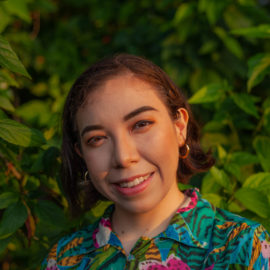
María Méndez reports for Texas Public Radio from the border city of Laredo where she covers business issues from an area that is now the nation’s top trade hub. She knows Texas well. Mendez has reported on the state’s diverse communities and tumultuous politics through internships at the Austin American-Statesman, The Texas Tribune and The Dallas Morning News. She also participated in NPR’s Next Generation Radio program while studying at the University of Texas at Austin. At UT, she wrote for The Daily Texan and helped launch diversity initiatives, including two collaborative series on undocumented and first-generation college students. One of her stories for these series won an award from the National Association of Hispanic Journalists. She has spent the last year reporting for The Dallas Morning News as a summer breaking news intern and then as a fellow in the paper’s capital bureau in Austin. She is a native of Guanajuato in Central Mexico.

Dominic Anthony Walsh

Dominic Anthony Walsh reports for Texas Public Radio focusing on the Hill Country region. Walsh knows Texas well. Before his senior year, he reported for TPR, and continued as a stringer in the fall and an intern again in the spring. He covered local arts and culture in San Antonio, a mass casualty shooting, voting rights, and the coronavirus pandemic, plus broke the news of a billion-dollar federal lawsuit brought by a group of farmers against one of the largest logistics companies in the world. He contributed to the statewide Texas Standard and to the NPR national newscast. Dominic got his start in broadcasting and journalism at Trinity University, where he worked at KRTU 91.7 FM and the independent campus newspaper, the Trinitonian. He is from Schertz, a suburb of San Antonio. He is also a percussionist, and spent six years in the Youth Orchestras of San Antonio. He remains active in the local music community.

Maria Esquinca

María Esquinca is a reporter for Radio Bilingüe in Fresno, Calif, where she focuses on environmental issues in the San Joaquin Valley. A fronteriza, comfortable on both sides of the U.S.-Mexico border, she was born in Ciudad Juárez, Mexico, and mostly grew up across the Rio Grande in El Paso, Texas. She is an M.F.A candidate at the University of Miami. She has focused her reporting on issues that affect communities of color like immigration, gentrification, and discrimination. She interned at WLRN, the New York Times Student Journalism Institute, and was a Dow Jones News Fund Business Reporting intern at Crain’s Detroit Business. As a News 21 Ethics and Excellence Fellow, she reported on lack of access to clean, drinking water in colonias along the U.S.-Mexico border. The story was re-published in outlets like The Texas Tribune and the Center for Public Integrity. During her undergraduate education, she was a reporter and editor at The Prospector, the student-run newspaper at the University of Texas at El Paso. Her stories earned her awards from the Texas Intercollegiate Press Association and the College Media Association. Her poetry has been published in Waxwing, The Florida Review, and Glass: A Journal of Poetry.

Lexi Peery

Lexi Peery is a reporter for KUER/NPR Utah where she focuses on issues about fast-growing Washington County. Peery is a Salt Lake City native who has been in Southern Utah the past year reporting on all things related to the environment, development and government for The Spectrum & Daily News. She returned to Utah after graduating from Boston University, majoring in journalism and concentrating in environmental studies while earning the Blue Chip Award. During her senior year she was an environmental and newsroom fellow at WBUR, Boston’s NPR station. That same year she also interned for the national call-in show, “On Point.” While at BU, she worked her way up to editor-in-chief of the independent student newspaper, The Daily Free Press. She also was a correspondent at The Boston Globe and did freelance reporting for City Journals in the Salt Lake Valley.